What is MiVu?
MiVu is a testing system that measures the health of the lining (the mucosa) of your esophagus, the tube that carries food from your throat to your stomach. It is performed during a routine upper endoscopy (also called an EGD) and can give your physician useful information in about two minutes, often during the same procedure.
Why Your Physician May Recommend It
MiVu can help evaluate ongoing symptoms such as heartburn, regurgitation, chest discomfort, or trouble swallowing. It helps your physician tell the difference among:
- Gastroesophageal reflux disease (GERD), where acid has affected the esophageal lining
- Eosinophilic esophagitis (EoE), an allergic-type inflammation of the esophagus
- A normal esophageal lining (Non-GERD), which can provide reassurance
What To Expect During the Test
MiVu is added to your scheduled upper endoscopy, so it is not a separate appointment. A small, single-use sensor cap is attached to the tip of the endoscope. While you are sedated and comfortable, your physician gently touches the sensor to the lining of your esophagus and records measurements across roughly 10 centimeters of tissue. There is no extra preparation, no additional catheter, and nothing to wear home afterward.
How We Perform MiVu at Our Centers
1. Ordered with endoscopy
Your GIC gastroenterologist orders MiVu and schedules it together with your upper endoscopy at one of our accredited centers, Reno Endoscopy Center or South Meadows Endoscopy Center
2. Preparation
You follow the same instructions provided for your upper endoscopy, including fasting and any guidance on your medications.
3. Day of your procedure
You check in, meet your care team, and receive sedation for comfort, just as you would for a standard endoscopy.
4. During the endoscopy
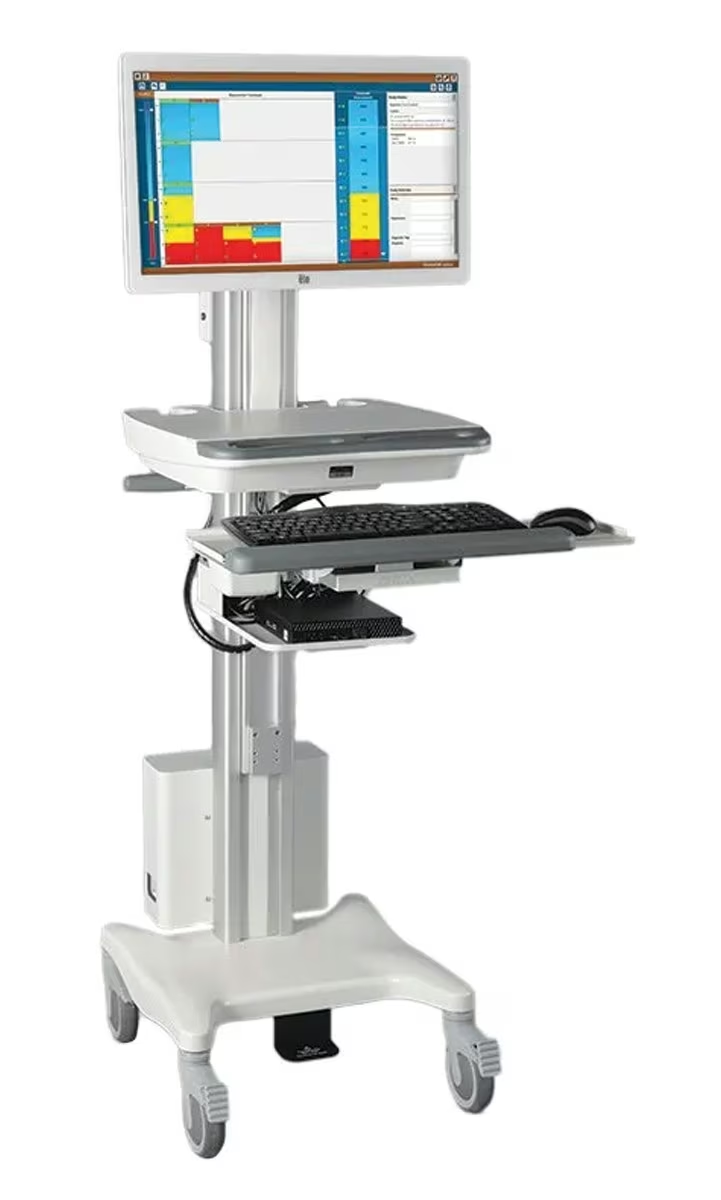
Your physician performs the endoscopy and, using the MiVu sensor, records mucosal measurements. Results are displayed in real time as a color map and a probability reading.
5. Results and next steps
Because results are available quickly, your physician can often review findings with you the same day and begin a treatment plan, without waiting on a separate pH study or biopsy results.
Benefits for You